




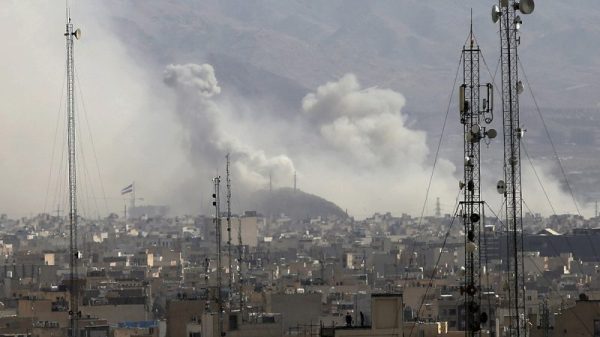

As coordinated U.S. and Israeli strikes on Iran continue, current and former defense officials say that while a limited strike lasting several days is feasible, sustaining a broader confrontation — one involving potentially hundreds of incoming missiles — is far more complicated.
The U.S. and Israel undertook a mission known as Operation Epic Fury, targeting Iranian leadership and military sites Saturday. Its duration is still unclear, but the campaign may go on for days, according to U.S. officials.
Sustaining operations beyond the initial window presents a more complex challenge — one shaped by a ‘zero-sum’ competition for missile defense inventories between the Middle East and Europe.
Officials and analysts warn that certain U.S. missile and air-defense interceptor inventories have been severely drawn down by the relentless pace of recent operations. The strategic dilemma for the Pentagon is that the systems required to shield U.S. bases from Iranian retaliation are the same ones being depleted by the defense of Ukraine and the ongoing protection of Israel.
Iran already has fired counterattacks near U.S. positions in Bahrain, Qatar, the United Arab Emirates, Kuwait and Jordan, with several host governments saying their air defense systems intercepted incoming projectiles. No U.S. service member fatalities or injuries have been reported as of Saturday, a U.S. official told Fox News Digital.
U.S. authorities have not publicly released casualty figures or formal damage assessments.
During the intense June 2025 Iran–Israel conflict, U.S. forces fired more than 150 Terminal High Altitude Area Defense Interceptors — roughly a quarter of the total global inventory — and a large number of ship-based standard missiles to protect allies, according to published defense assessments.
This shortfall largely is attributed to the dual pressure of supplying Ukraine against Russian cruise missiles and the surge of batteries to the Middle East. Replenishing these high-end systems can take more than a year, analysts say, because production lines are optimized for peacetime and cannot be surged overnight.
Independent groups have noted the U.S. currently produces roughly 600–650 Patriot PAC-3 MSE missiles annually, reflecting recent contracts to boost production capacity. Analysts say that in a high-intensity war with a near-peer adversary like Iran — where multiple interceptors are often used to defeat a single incoming missile — even a year’s worth of production could be consumed in a matter of weeks, especially after recent drawdowns in Ukraine and the Middle East.
‘The Department of War has everything it needs to execute any mission at the time and place of the President’s choosing and on any timeline,’ Chief Pentagon spokesman Sean Parnell said in response to readiness questions.
Retired Air Force Gen. Charles Wald, former deputy commander of U.S. European Command, said the United States retains the ability to surge conventional strike munitions into the region and draw from prepositioned stocks if a campaign is ordered.
‘From a conventional munition standpoint, we can always fly in more weapons from around the world,’ Wald told Fox News Digital. ‘There are a lot of weapons stored there with this type of mission in mind.’
The greater concern, he acknowledged, lies on the defensive side.
‘The issue will be defensive weapons — Patriot, SM-3, and the Arrow system in Israel,’ Wald said. ‘You can never have enough defense.’
Regional analysts caution that in a sustained missile exchange, interceptor inventories — not offensive strike weapons — could become the binding constraint.
‘There is a limit to how many THAAD missiles can be used,’ Israeli defense analyst Ehud Eilam said. ‘These are not systems you can reproduce overnight.’
Iran is believed to possess between 1,500 ballistic missiles and 2,000 ballistic missiles, as well as drones and shorter-range rockets capable of striking U.S. bases and Gulf energy infrastructure.
Several experts also pointed to the psychological impact of recent U.S. operations.
The swift Operation Absolute Resolve in Venezuela in January 2026 and summer 2025’s 12-day exchange with Iran have reinforced confidence in American military capability. However, one former defense official cautioned that success in these tightly scoped missions can create a false sense of momentum toward action in far more complex scenarios.
‘Iran is a very different problem,’ the official said — a large, heavily armed state with extensive missile forces and regional proxy networks that would not resemble a short, surgical operation.
Wald acknowledged that risk.
‘You don’t want to get people so confident that you don’t consider the risks. It’s not going to be as clean or pure as, say, Venezuela was, or the 12-day war.’
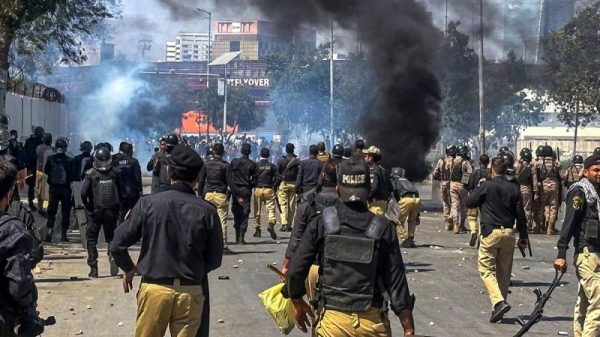
Even as the strikes continue, officials warn that retaliation from Iran and its network of allied militias could broaden the conflict. Iran’s ballistic missiles and drones — coupled with allied groups in Iraq, Lebanon and Yemen — already have prompted missile salvos against U.S. bases and Gulf partners, according to defense reporting.
Experts say the 2025 conflict underscored how quickly escalation can test both defensive systems and political will.
‘Once these things break, you own what follows,’ one former official said, underscoring the risk that missiles and proxy actions could quickly widen a limited U.S. strike.
Wald warned that even a successful military phase would not eliminate the political uncertainty.
‘Bombing Iran is not going to do regime change,’ he said, emphasizing that air power can degrade capability but cannot guarantee a stable political outcome.
Beyond the immediate exchange, officials say the economic consequences could prove just as consequential. Roughly one-fifth of the world’s oil supply transits the Strait of Hormuz, and even limited disruption could send global energy markets sharply higher.
For Washington, the strategic calculus extends beyond the Middle East. China remains the primary long-term competitor, with the war in Ukraine already consuming significant resources.
A sustained regional conflict would draw on naval assets and air-defense systems that planners must also consider for potential future contingencies in Taiwan or North Korea.
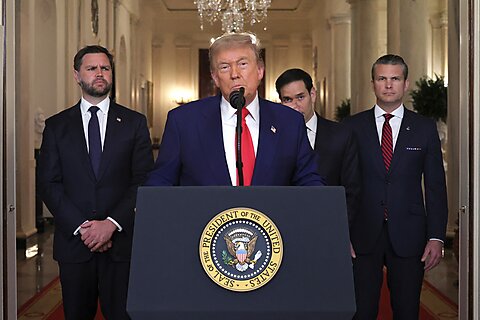
Officials familiar with internal deliberations say President Donald Trump has sought a high degree of confidence in how an Iran contingency would unfold — a standard that becomes harder to meet in scenarios involving escalation and political fallout.
Fox News Digital has reached out to the White House for comment.
Related Article